Recycling and Sustainability — Lawn Mowing Spitalfields
 At Lawn Mowing Spitalfields we place eco-friendly waste disposal and a sustainable rubbish gardening area at the heart of every job. Our Spitalfields lawn mowing and garden maintenance teams design on-site workflows that prioritise reuse, composting and correct segregation so that garden refuse becomes a resource rather than rubbish. We aim to reduce landfill dependence and promote circular practices across the local community.
Our approach to green services in Spitalfields and surrounding boroughs combines practical site management with awareness of the boroughs' approach to waste separation: separate food and garden waste, dry mixed recycling for paper and plastics, and dedicated glass and metal streams where available. By aligning with local waste policies we make it easier for residents and businesses to join our sustainable route for organic and mixed recyclables.
 Sustainable lawn care in Spitalfields means that lawn clippings, prunings and woody debris are handled with a clear recovery plan. We operate a dedicated rubbish gardening area at our depots where materials are sorted, shredded and either composted on-site or transferred to partner facilities. That sorting step reduces contamination and increases the quality of material sent to the recycling system.
Our Recycling Percentage Target and Metrics
We have set a measurable recycling percentage target to drive continuous improvement: to achieve a 70% recycling and reuse rate for all collected garden and site waste by the end of 2027. This target covers garden organics, reusable timber, metal and plastic pre-sorted for recycling and items diverted to charities for reuse. In addition to the headline target we track a more ambitious operational goal to divert 90% of green waste from landfill through composting, mulching and soil reuse.
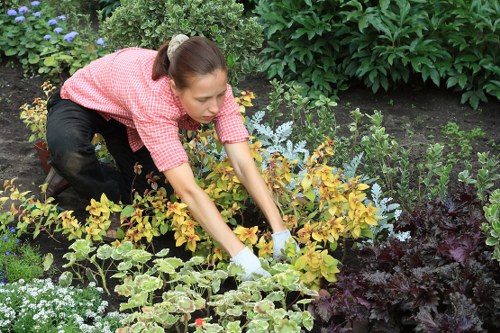 To reach those targets we monitor material flows from the point of collection through processing. Key performance indicators include percentage weight diverted to composting, weight of inert material removed, and percentage of reusable items recovered for charity donation. These KPIs guide weekly route adjustments and depot processing.
Practical activities that lift our recycling rates include:
- On-site separation of green waste, timber, plastics and metal before transport
- Chipping and mulching of prunings for reuse in local community gardens
- Composting of suitable organic materials and returning compost to lawns and beds
- Preparing reusable items – pots, furniture and ornamental features – for donation
Local Transfer Stations and Resource Hubs
 We cooperate with the local municipal transfer stations and resource recovery hubs that service East London and neighbouring boroughs. Where the borough operates dedicated transfer facilities we coordinate drop-offs to reduce double-handling and short-haul movements. These local transfer stations allow us to consolidate green waste for composting, to route timber to specialised recycling processors, and to hand off recyclable plastics and metals to authorised recyclers.
Working with nearby transfer stations also means we can respond to the boroughs' varying waste separation rules. For example, where separate food waste collections exist we ensure contaminated organic material is segregated; where the local authority accepts dry mixed recycling we prepare loads to meet their contamination thresholds. This alignment boosts recovery rates and avoids rejected loads.
We keep a dynamic list of the transfer hubs we use, and when possible we prefer facilities recognised for high-diversion performance and transparent reporting.
Partnerships with Charities and Community Projects
 Partnerships are central to our reuse strategy. We work with local charities, community gardens and social enterprises to find new homes for reusable items removed during garden clearances. Instead of consigning salvageable furniture, planters and tools to landfill, we partner with community organisations and workshops that refurbish and redistribute them. These relationships support local employment and keep materials circulating in the community economy.
Examples of partnership outcomes include giving plant pots to community allotments, donating old but repairable garden furniture to local groups, and collaborating on compost swaps that benefit neighbourhood green spaces. These agreements are mutually beneficial and form an essential part of our sustainable rubbish gardening area model.
Low-carbon vans and last-mile reductions: Our fleet strategy supports sustainability beyond material handling. We operate an increasing number of low-emission vehicles: electric vans for short urban routes, plug-in hybrids for flexible jobs, and optimised small rigid vehicles for larger loads. Route planning software reduces mileage and idle time, while regular vehicle maintenance ensures fuel-efficient operation. Where access allows, we also use cargo bikes and handcarts for central-Spitalfields work to cut emissions further.
How We Measure Success and Continue Improving
Success is measured by meeting our >70% recycling target, reducing CO2 per job through our low-carbon van programme, and through the volume of material reused via charity partnerships. We publish annual summaries of our diversion rates and actions taken to improve the quality of recycled streams. Continuous improvement in separation practices, staff training and community engagement keeps our sustainability credentials evolving.
At Lawn Mowing Spitalfields our combination of a dedicated sustainable rubbish gardening area, close coordination with local transfer stations, active charity partnerships and a low-carbon fleet means we deliver green services that protect resources, cut emissions and support the local community. Whether you choose Spitalfields lawn mowing, Spitalfields lawn care or broader garden services, our environmental commitments are embedded in every contract.
Join us in making gardening and grounds maintenance in Spitalfields cleaner, greener and more circular — where waste becomes material for new life, and every collection helps the borough meet its reuse and recycling goals.